
Few things shift a round as much as a well-placed smoke. One that lands correctly can blind an AWPer, open up a five-versus-two site take, or shut down a retake before it starts. Still, plenty of mid-ranked players see smokes as extras instead of central tools. This guide walks through the basics of smoke usage, then lays out ten proven lineups on Mirage, Inferno, Dust 2 and Nuke that you can add to your game right away.
Why Smokes Win Rounds
A smoke deals no damage, yet its real value is what it hides: information. Anyone inside cannot see out, and anyone outside cannot see in. That barrier forces defenders to commit to a spot or fall back. Against organized T-side utility, a lone CT on a key angle quickly becomes a weakness once smoke covers his position.
Pro teams don’t win execute rounds so often because they aim better. They win because they prepare. Most big executes in professional CS are built around two or three smokes that clear the most dangerous CT spots before anyone pushes. Copying that preparation is the quickest path to a higher round win rate at any rank.
Smoke Fundamentals: Timing, Bloom, and Positioning
Bloom Time
In CS2 a smoke needs roughly one second to fully bloom after it lands. Many players throw and sprint forward before it is opaque. Wait until the cloud is complete before crossing the sightline it blocks. A half-formed smoke can be seen through from the other side and offers almost no protection.
Re-opening Smokes with Grenades
CS2 added a mechanic where the blast of a flashbang or HE grenade can briefly part a smoke, opening a short window of visibility so players can peek angles that were blocked. For CTs this helps check whether the bomb was planted inside a smoke. For Ts it means smoke is not permanent cover, since opponents can catch a glimpse of you through a disturbed cloud.
Jump Throws
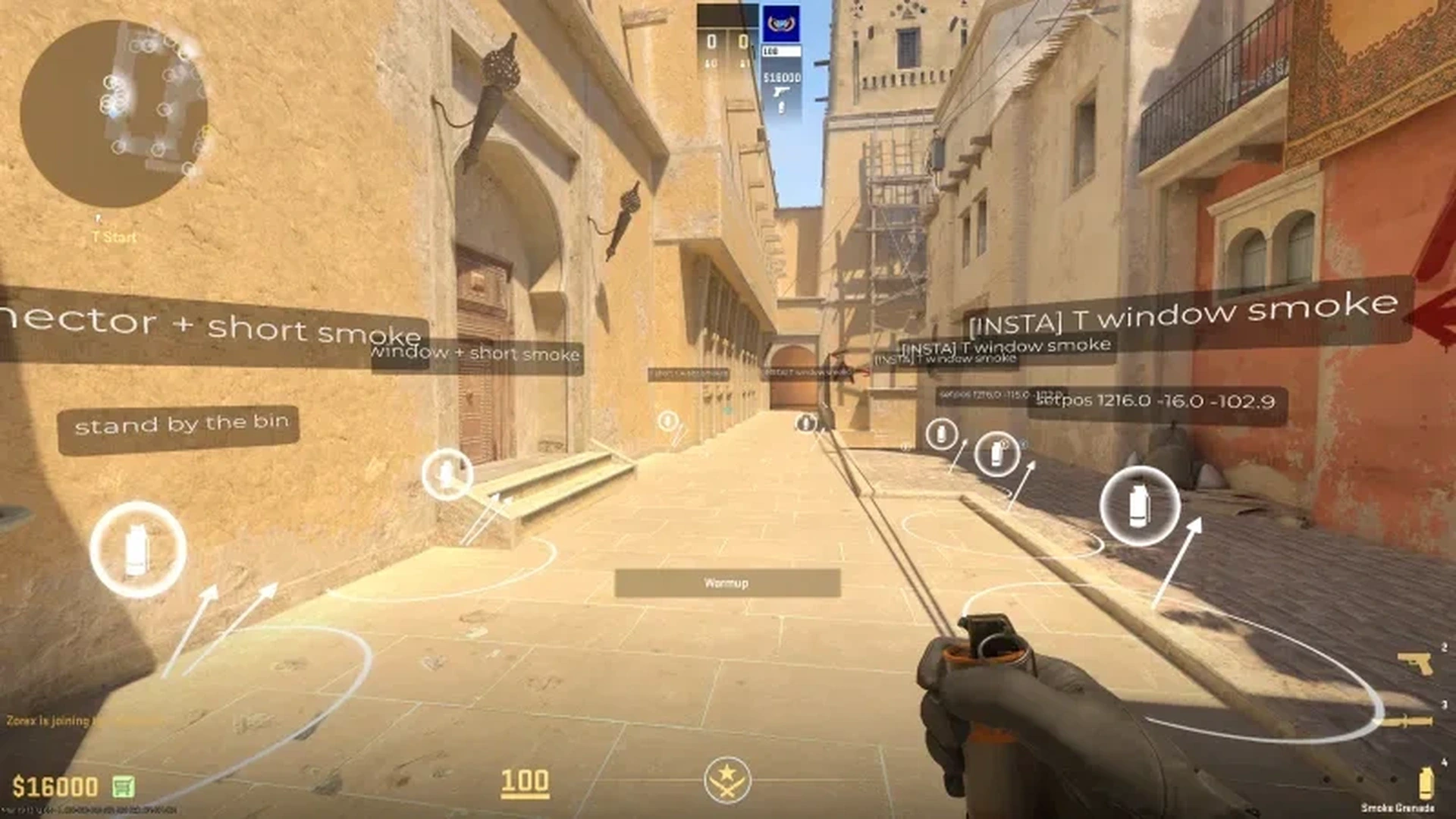
Plenty of long-range lineups need a jump throw, pressing jump and throw at the same moment, to reach their landing zone. In CS2 you can bind jump throws to a single key through the console or settings, which is far more consistent than timing them by hand. Set up that bind before practicing any lineup that calls for it. Most lineups below note whether a jump throw is required.
Mirage Smokes
Lineup 1: Window Smoke (A Execute)
The window smoke covers the CT holding the mid-map window room, stopping them from shooting into A site during a T-side execute from A main or ramp. Stand at the corner of the T-side mid wall, line your crosshair up with the top-right edge of the archway above the window, and run-throw. It lands consistently on the window ledge and is usually the first smoke a Mirage player learns. Skip it and the window player gets free shots at everyone entering A.
Lineup 2: CT Smoke (A Execute)
This smoke blocks the CT route into A site from the spawn corridor. Without it, a defender can rotate in freely and catch Ts planting. Stand just inside A main, aim at a particular crack in the building directly above the CT archway, and throw with a standing left-click. Paired with the window and jungle smokes, it forms the full three-smoke A execute common across professional Mirage play.
Lineup 3: Jungle Smoke (A Execute)
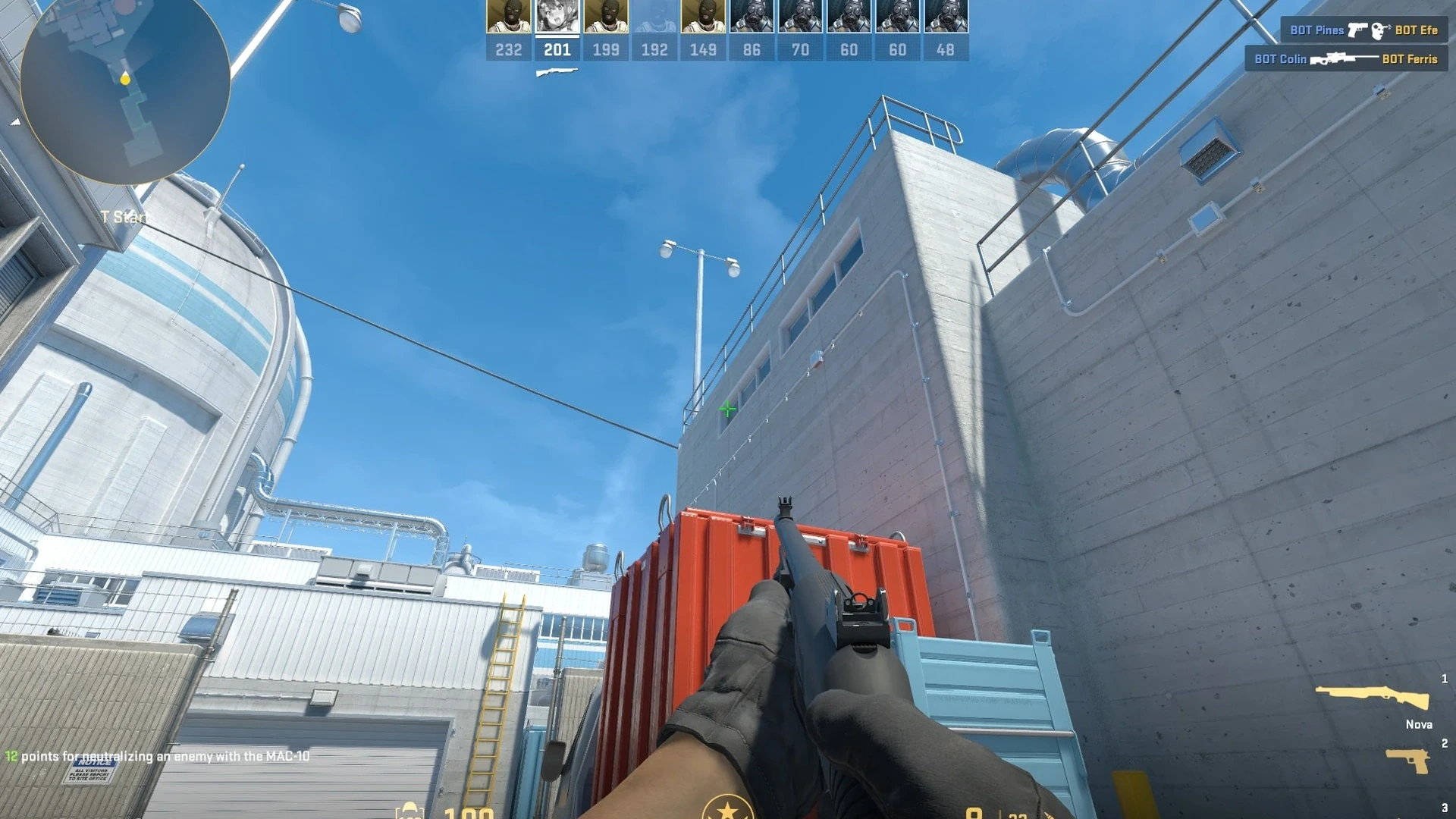
Jungle smoke clears the jungle spot on the T side of A site, where a CT can hide and fire into Ts moving through A main. It finishes the standard Mirage A execute. Throw it from A ramp with a jump throw aimed at a specific roof edge. Window, CT and jungle together let a full five-player A execute move with no exposed angles, giving near-guaranteed site control against a typical CT setup.
Lineup 4: Mid-to-B Short Smoke
When hitting B from T spawn through short, a smoke on the CT short connector stops a defender from crossing over and catching Ts coming into B from the apartments side. Throw it from B apartments with a standing throw aimed at the corner where short meets the B site entrance. It buys the two or three seconds needed to plant before a rotation from mid arrives.
Inferno Smokes
Lineup 5: Balcony Smoke (B Execute)
On Inferno B, the balcony dominates: a raised platform overlooking the main B entry. A CT or AWPer up there can hold off several attackers alone. Throw the balcony smoke from T-side B tunnels with a jump throw lined up on the top edge of the arch entrance. Landing it reliably is a must for any B execute on Inferno, since without it the balcony angle is nearly impossible to challenge safely.
Lineup 6: CT Smoke (Inferno B Execute)
The Inferno B CT smoke blocks the connector between CT spawn and B site, stopping a quick CT rotation during the plant. It is always paired with the balcony smoke in a coordinated B execute. Stand in B tunnel, aim just above the left edge of the arch opening, and throw standing. Balcony plus CT is the bare minimum for a safe B execute and the foundation of any structured Inferno team play.
Lineup 7: Apartments Smoke (A Execute)
When hitting A on Inferno, the CT holding the right-side apartments area is one of the most dangerous defenders. A smoke thrown from the T-side A pit that drops into the apartments doorway shuts that angle, letting Ts push the archway without fire from above. It needs a jump throw from one specific spot in pit and is a common, well-drilled lineup at any organized Inferno level.
Dust 2 Smokes
Lineup 8: Xbox Smoke (Mid Control)
The Xbox smoke lands on mid bridge and blocks the CT mid AWP, letting Ts cross from lower tunnel toward upper tunnel or catwalk unseen. Throw it from T-side mid with a left-click throw aimed at a low wall section near T spawn. Arguably the most important smoke on Dust 2, it belongs in every player’s memory regardless of role or rank. For more on how it fits into B-site executes, see the CS2 Dust 2 map page.
Lineup 9: B Site CT Smoke (B Execute)
This smoke stops the CT entering B site, preventing an immediate rotation during the plant. Throw it from upper tunnels with a standing throw. Combined with the Xbox smoke, it forms a complete B execute structure that removes both the mid AWP threat and the CT rotation threat, leaving only the B-side defenders to handle during the push and plant.
Nuke Smokes
Lineup 10: Heaven Smoke (A Execute)
Heaven is the harshest angle on Nuke A site. Throw the heaven smoke from the top of outside ramp with a jump throw lined up on the edge of the reactor building roof. It lands squarely on the heaven catwalk and blocks the AWPer or rifler who would otherwise punish the whole execute for free. Without it, a single CT in heaven can hold off an entire team pushing through hut and ramp entry. For full A site context, see the CS2 Nuke map page.
Building Your Smoke Repertoire
Trying to learn all ten lineups in one session backfires. Pick the map you play most and master the two or three smokes behind its most common execute. Drill them on an offline server until they land nine times out of ten, then add the secondary smokes. After two to three weeks of focused practice, you will have a complete execute smoke set for your main map that you can repeat under match pressure without overthinking it.
| Map | Core Smokes | Execute Enabled |
|---|---|---|
| Mirage | Window + CT + Jungle | Full A site execute |
| Inferno | Balcony + CT | B site execute |
| Dust 2 | Xbox + B CT | B site execute via mid |
| Nuke | Heaven | A site execute from ramp |
“Often the gap between a 10k-rated player and a 15k-rated one isn’t aim. It’s knowing which three smokes to throw before the execute begins.”
To practice these lineups in context, check the CS2 maps overview. The Mirage map page has visual callout layouts that help you find the landmarks named in smoke guides.
Utility Coordination in Five-Stack Play
Smoke lineups reach their full potential when all five players coordinate utility in the same round. A standard execute may need two smokes, a flash or two, and a molotov, spread across four players so each carries only one or two grenades and still has full rifle ammo. Assigning smoke duties before the round starts, instead of hoping someone remembers, separates a scripted execute from a messy rush.
In ranked solo queue you can approximate this by calling smoke plans in voice chat at round start. Something like “I have window and jungle, someone cover CT” is enough to organize a clean Mirage A execute with no prior team practice. Smoke knowledge plus basic communication consistently beats raw mechanical skill without coordination.
Wrapping Up
Smokes are rounds you can take for free. Each lineup here has earned its place in pro and high-level competitive play because it reliably and repeatedly removes the most dangerous positions. Start with one map, learn the core two or three smokes for its key execute, and expand from there. A month of steady practice should make smoke work the biggest single improvement to your CS2 game.
Comments