
Finn “Mischief” Farrer has released OpenVRS, a public simulator meant to make Valve Regional Standings scenarios easier to examine. Farrer is known for building simulations that let Counter-Strike teams estimate how schedules and likely match results could influence their chances of reaching a Major.
The tool tackles an information gap rather than altering the ranking system. OpenVRS provides auditable simulation data and lets users review calendar decisions, weigh the value of events and test roster changes. The project is public, but official standings and invitation decisions stay beyond its reach.
VRS outcomes depend on several connected factors. A team may assess an event, yet the final impact also hinges on opponents, results and the broader ranking field. When those links are hard to see, a schedule can seem valuable without explaining why one route looks better than another.
OpenVRS breaks that problem into a range of scenarios. Rather than presenting one prediction as fact, it lets different inputs be compared side by side. That difference matters: a simulation can reveal assumptions and possible consequences, but it cannot guarantee a ranking position, an invitation or a Major place.
Auditable scenarios can improve how teams plan a season
Farrer describes VRS as confusing, closed and hard to follow. His answer is to make the simulation data auditable. Practically, users can trace the route behind a result instead of receiving only a final estimate. A visible path is easier to challenge when an assumption, opponent or event choice seems wrong.
Calendar planning is the most immediate application. Teams often face overlapping opportunities and must choose which competition gets preparation, travel and roster time. OpenVRS can run those routes as scenarios. It cannot decide what a team should prioritize, but it can bring ranking consequences into the discussion rather than leaving them as an unexplained guess.
The project also ties into a wider push for openness around VRS data. Its organization maintains a public fork of ValveSoftware’s counter-strike_regional_standings repository and frames the aim as improving accessibility. That link gives the project a visible data base, although users still need to separate the simulator’s calculations from Valve’s official outputs.
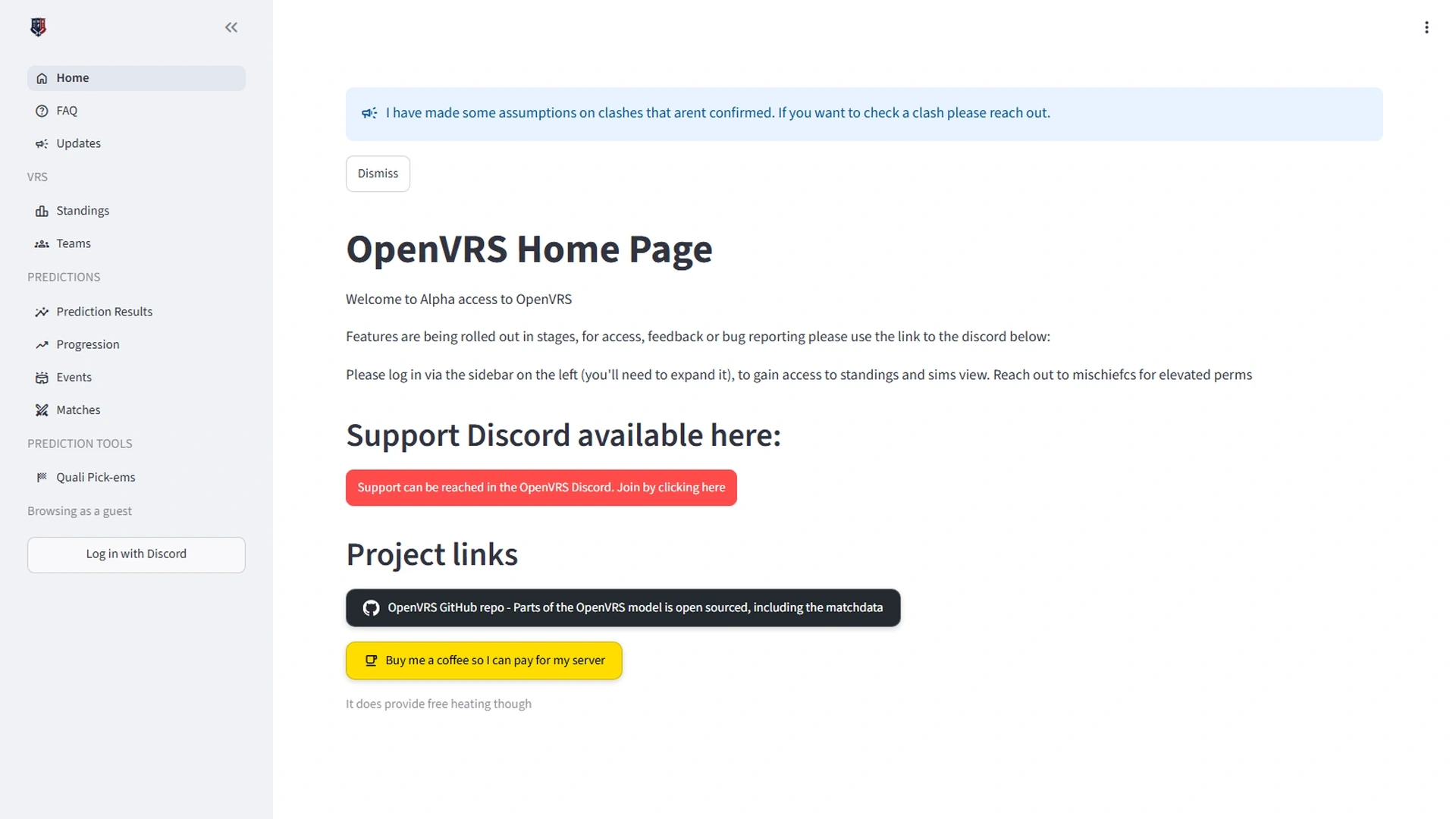
- Examine the data and assumptions behind a simulated qualification path.
- Compare calendar routes before committing to competing events.
- Weigh the relative worth of events within one planning model.
- Check how a roster change could shift a simulated standings path.
Roster testing is particularly helpful because personnel moves can affect more than raw performance. OpenVRS lets teams compare hypothetical lineups before treating a change as the only workable route. The outcome stays conditional, yet the comparison can show which assumption is responsible for a large difference.
Public access also widens who can scrutinize the reasoning. Analysts, players and fans can work from the same visible scenario instead of arguing over an unexplained screenshot or private estimate. That does not make every interpretation right, but it sharpens disagreements, since people can focus on the inputs and methodology behind the result.
The tool is a planning aid, not an official invitation engine
OpenVRS should be treated as a model of possible outcomes. Match results are uncertain, event fields may change and every scenario is only as good as its inputs. A team that views a favorable simulation as a guaranteed spot would be mistaking a conditional path for a finished competitive result.
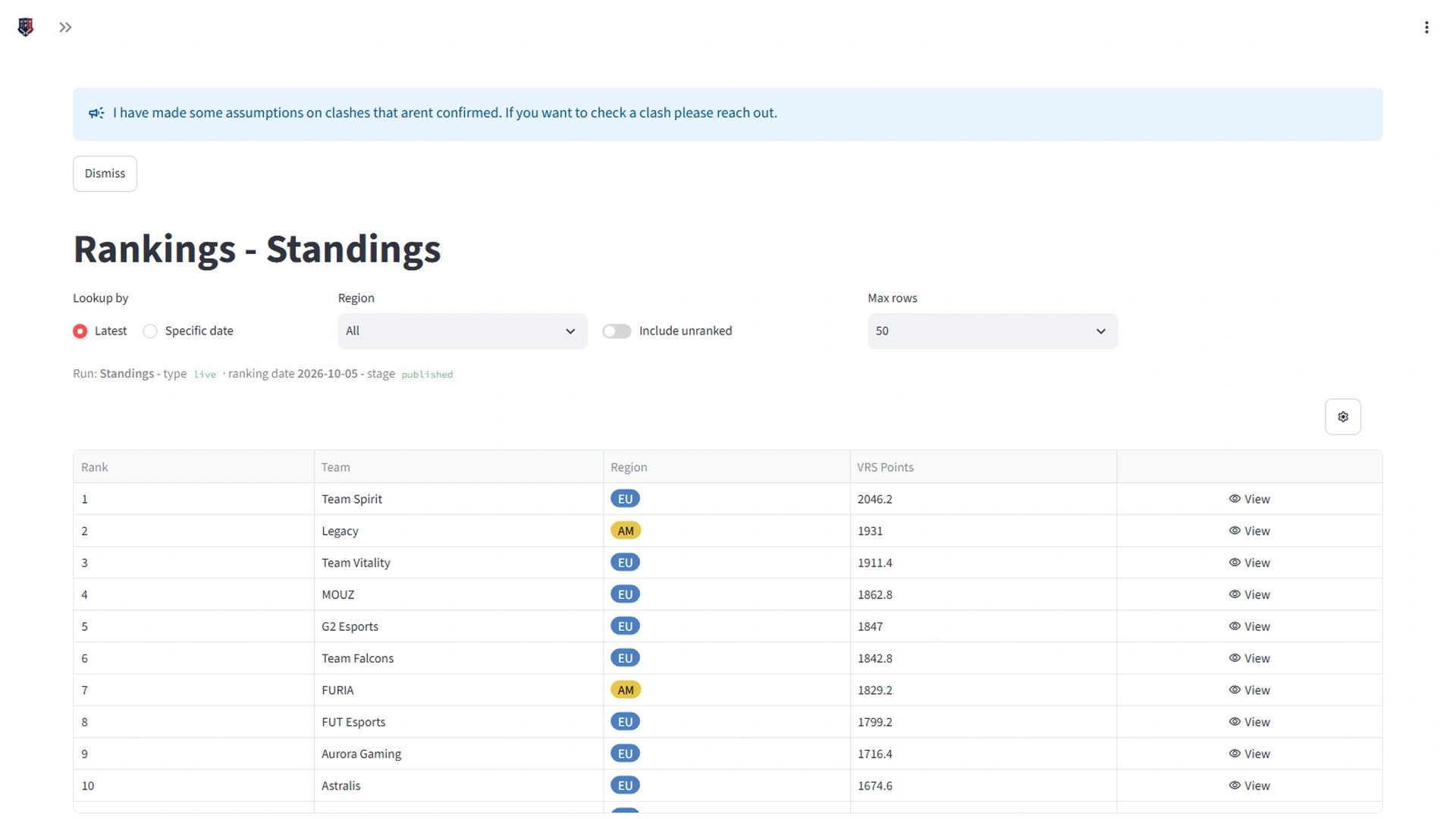
The safer approach is comparative. If one calendar yields a stronger simulated route than another, staff can look into why, then weigh that against travel, preparation and sporting priorities. If a roster experiment shifts the model sharply, the team can examine that assumption instead of accepting the output at face value.
That discipline also protects the public conversation around VRS. The simulator can improve understanding without claiming authority it lacks. Its value lies in showing how a scenario was built and letting others reproduce or challenge it.
| OpenVRS function | Question it helps examine | Limit |
|---|---|---|
| Auditable simulation data | How was this path produced? | It is not an official Valve decision |
| Calendar planning | Which event route looks stronger? | Future match results remain unknown |
| Event-worth comparison | Why does one event matter more in the model? | Competitive and travel costs still require judgment |
| Roster-change testing | How might a different lineup alter the scenario? | A simulation does not confirm a transfer |
OpenVRS gives the Counter-Strike community a public means of examining standings scenarios that were once hard to follow. Combining auditable data, calendar comparison and roster testing can make planning talks more concrete for teams and easier to scrutinize for observers.
The project is most valuable when its outputs are read as conditional evidence. It can clarify a route, expose an assumption and compare choices, while official rankings, invitations and match results still decide what actually happens.



Comments